Á mon seul désir
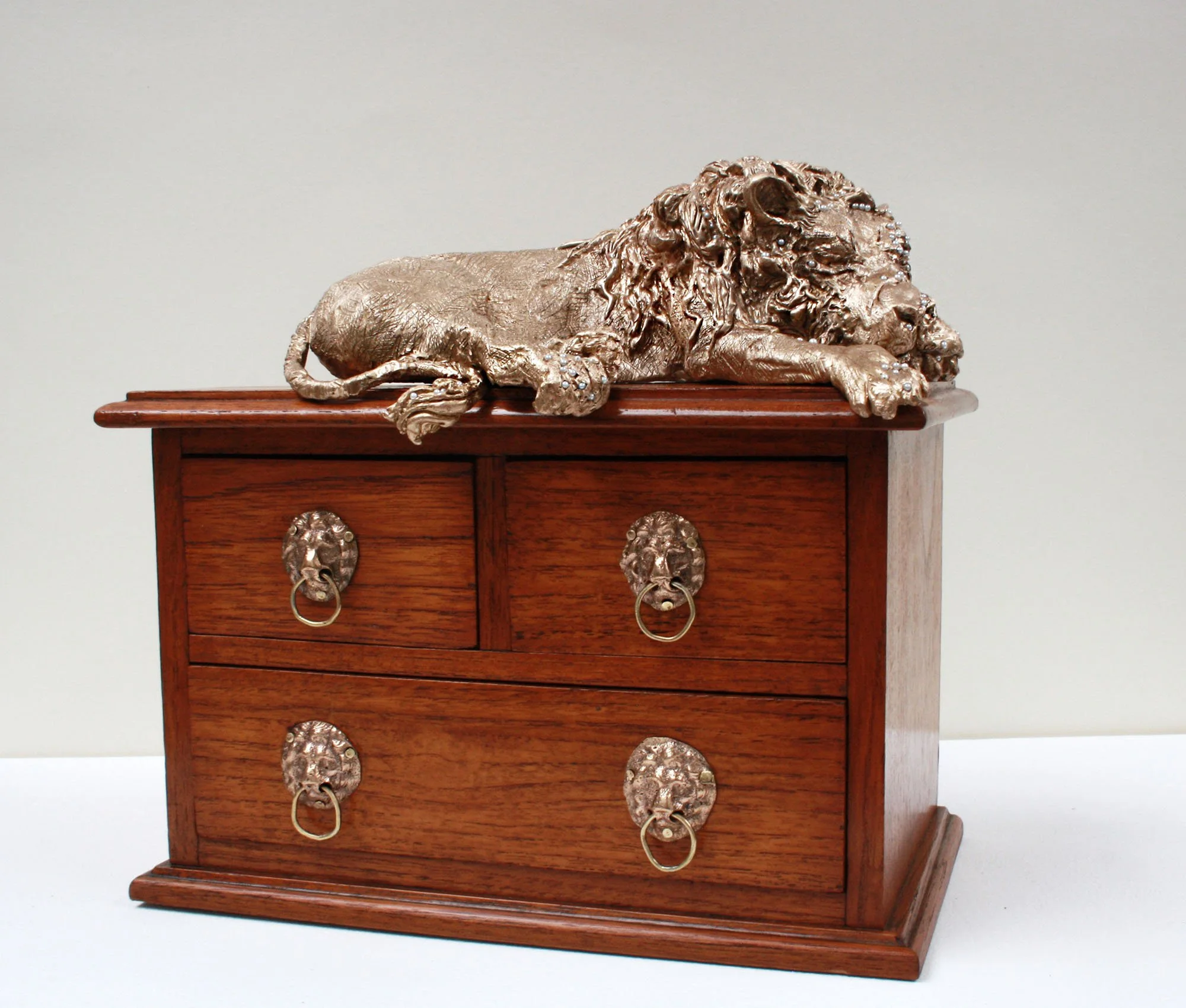
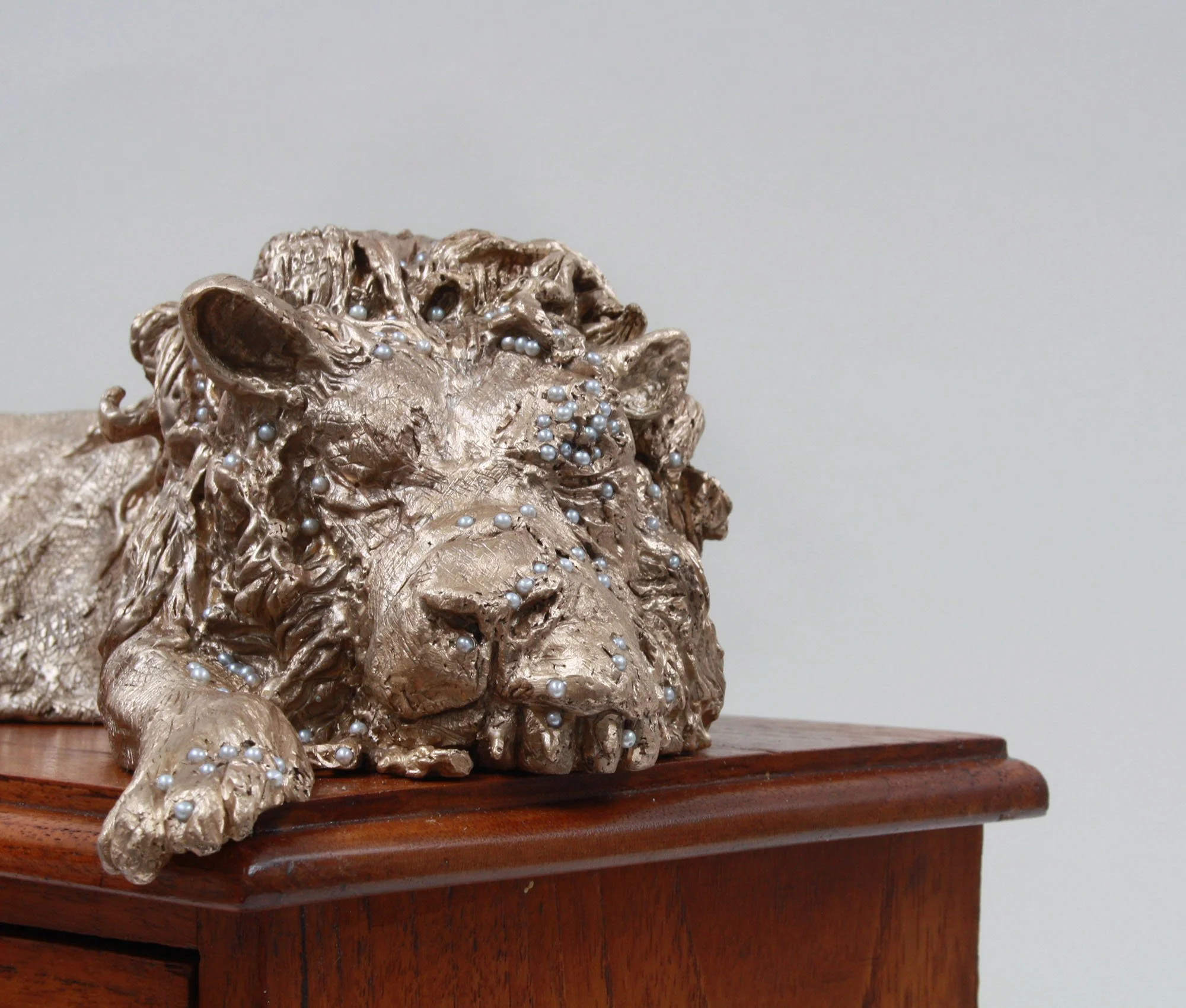
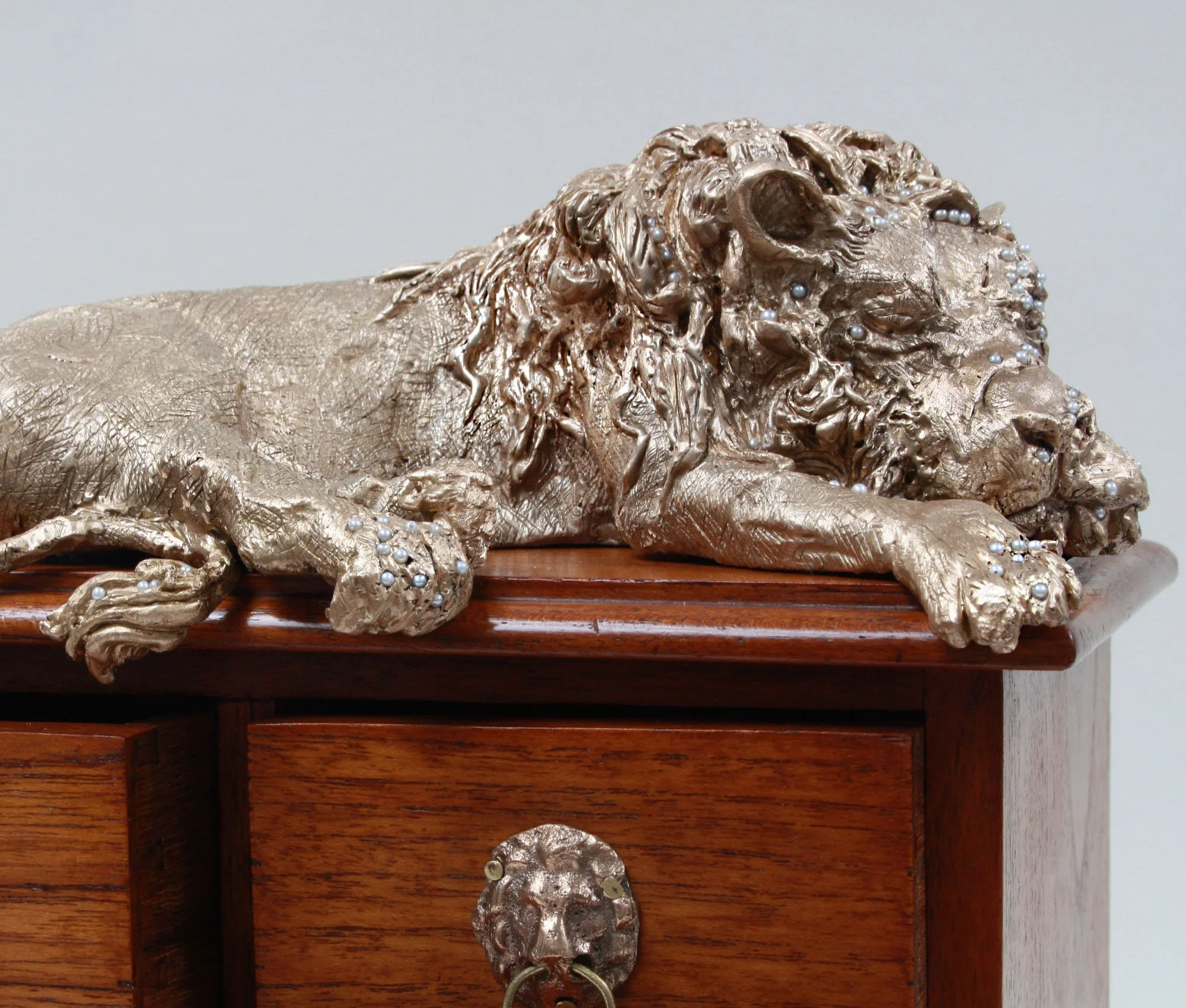
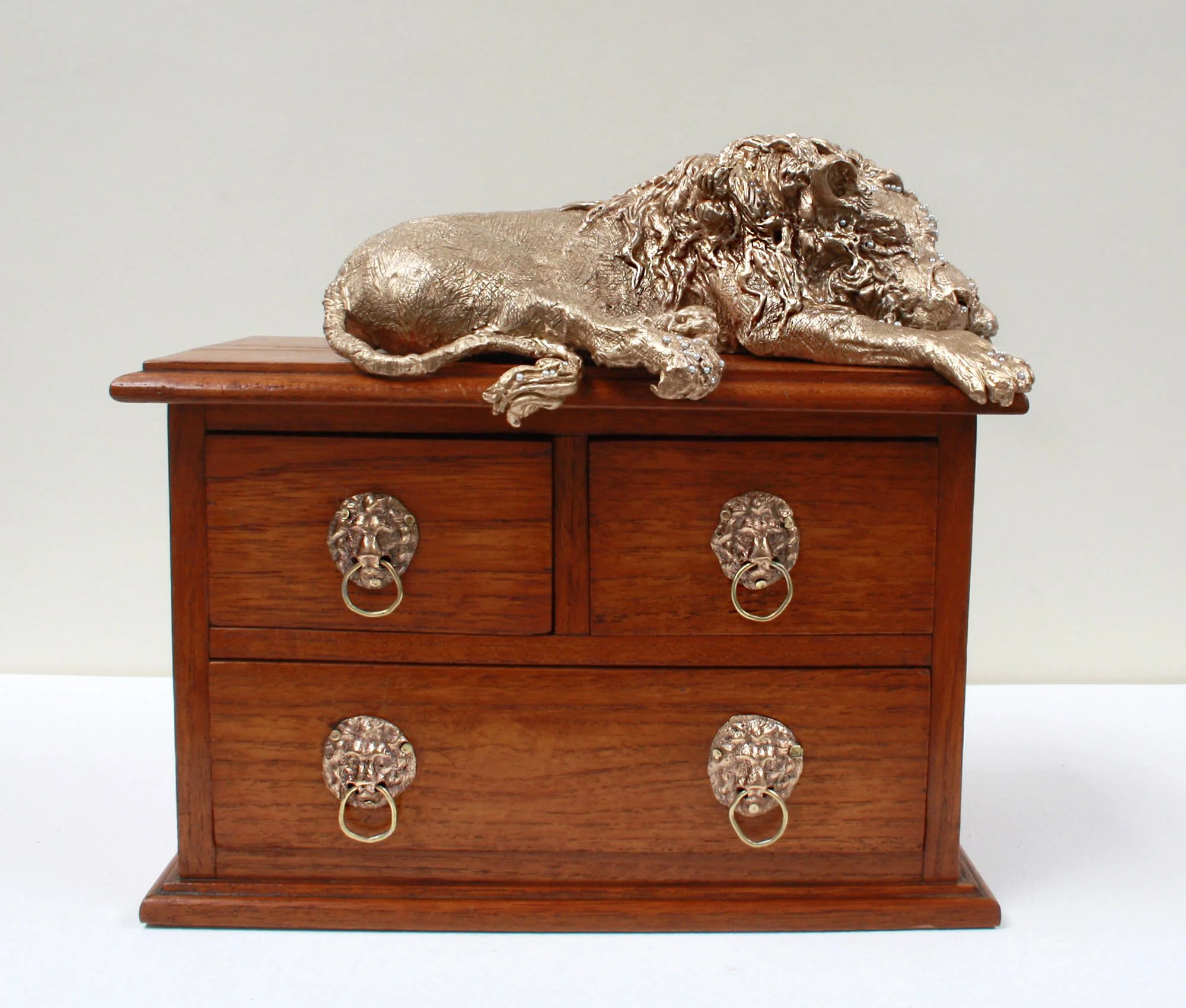
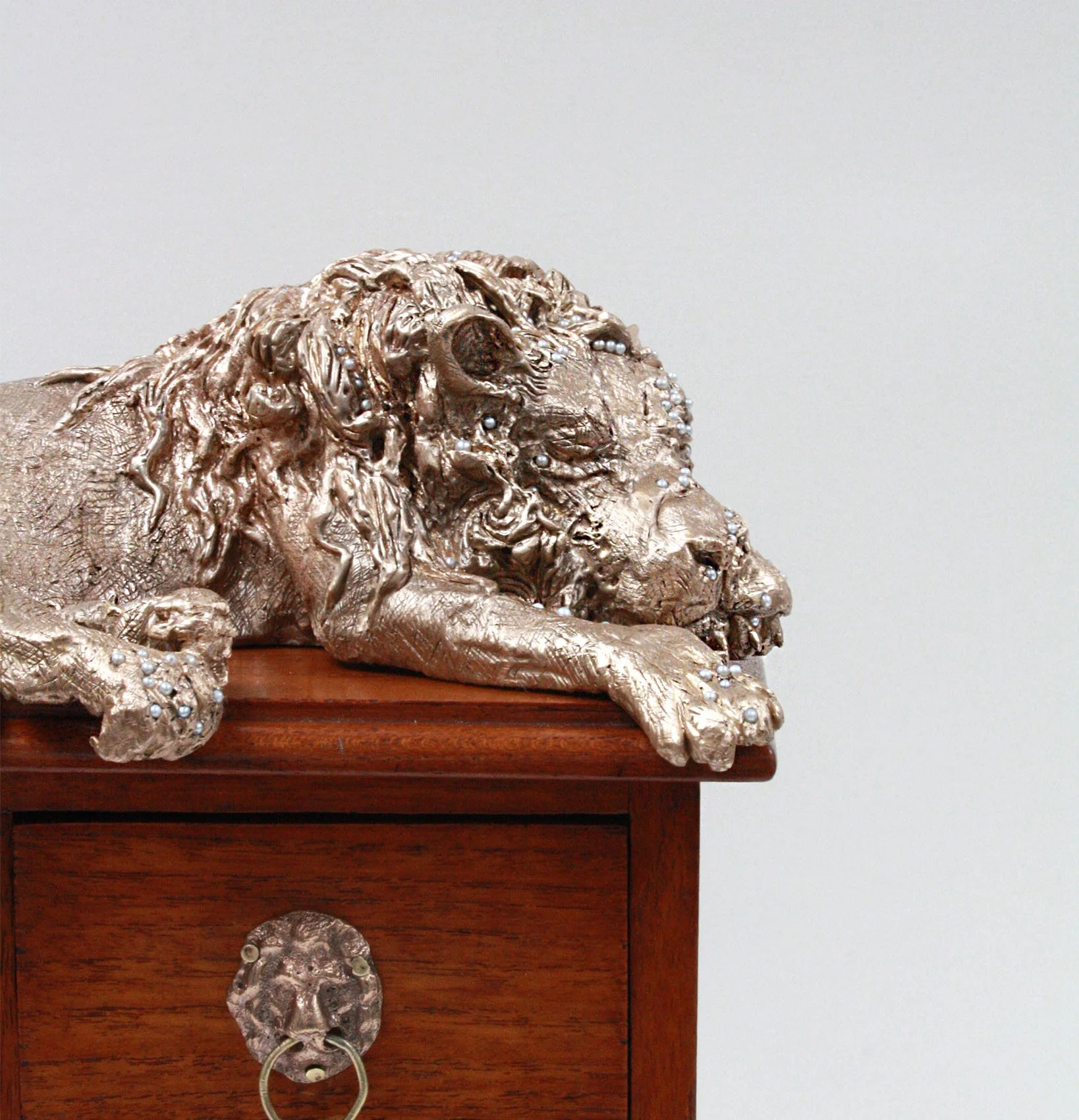
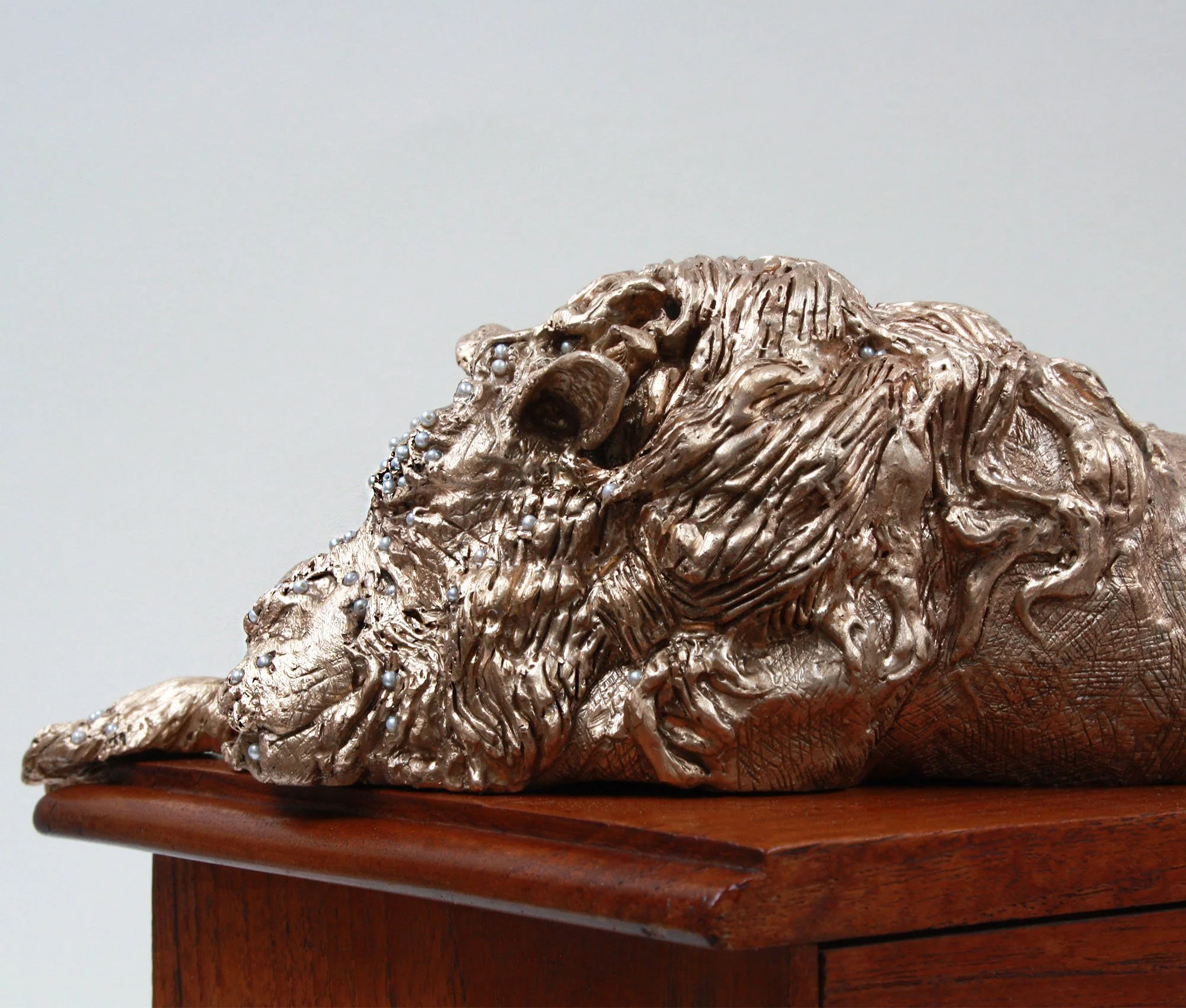
Keeping in line with the original lion head pulls on the Edwardian oak chest of drawers, “À mon seul désir”, is guarded by a dozing lion, dripping with pearls as though he has just dug up a trove of treasure. The pearls’ lustre reflects that of glazed porcelain.
In the 1730’s, Augustus the Strong commissioned the largest order for porcelain animals from the Meissen Factory for a royal menagerie. At the time, this was an unprecedented demand, pushing the technological process of porcelain to the maximum, with an order of 296 mammals and 292 birds, realistic in size and colouring. Records show the lion was the most technologically challenging to produce, with twenty-four lions, both male and female commissioned. One surviving lion is held in the Metropolitan Museum of Art. During the era of the cabinet of curiosities, the King’s request reflected his power, not just over his kingdom, but the whole of the natural world.
Lions featured in medieval tapestries often represent Christ and resurrection, with the Medieval belief that cubs were born dead, and brought back to life by their parents’ breath. The Butler-Bowdon Cope, embroidered in the mid 1300’s, is crafted from rich materials of silk, gold, and silver, and shows religious scenes bordered by curling oak branches decorated with lion faces adorned with seed pearls.
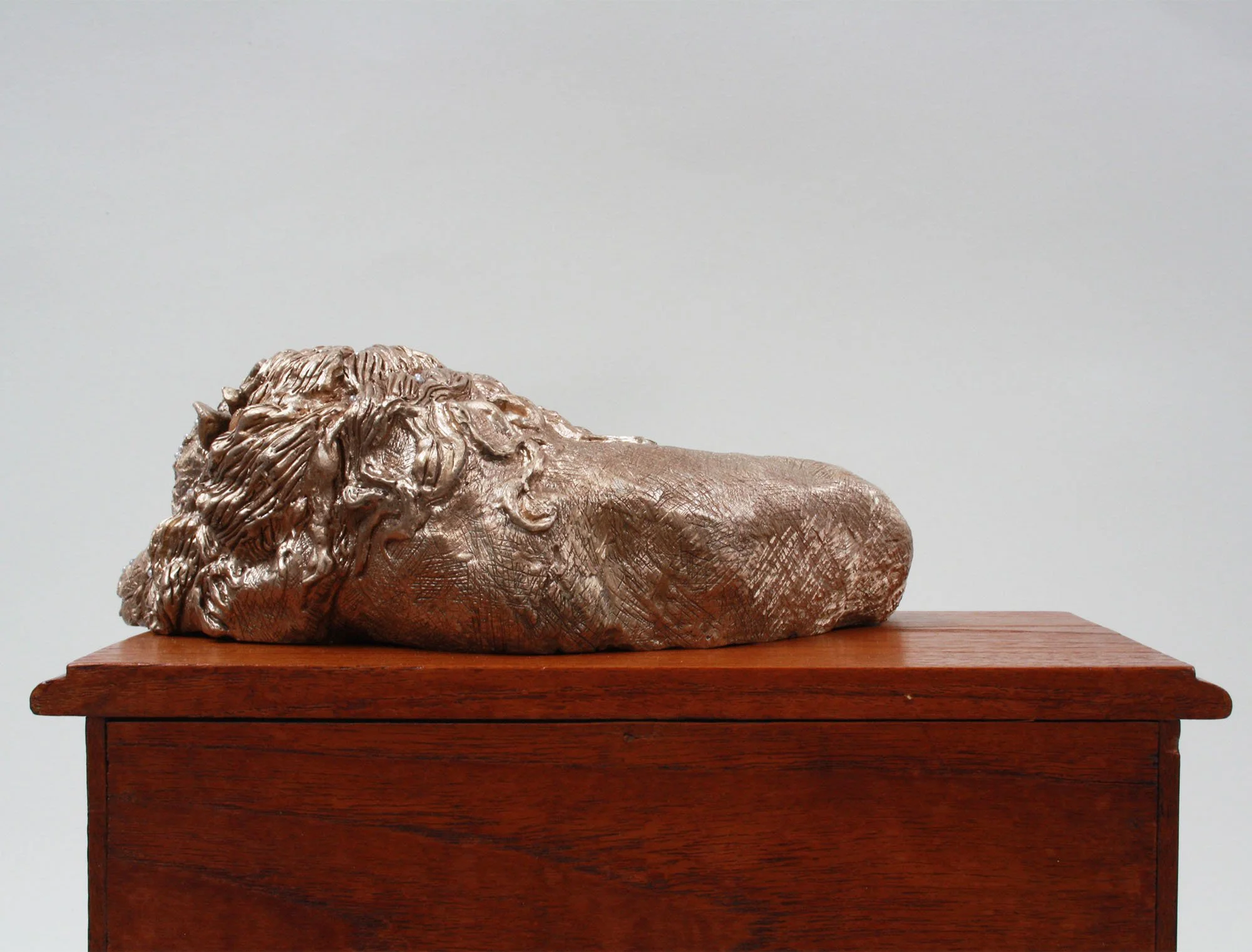
A most significant example of lions in embroidery is the mysterious Cluny Tapestries. The textures of the body of the lion featured on this piece were hand carved to mimic woven fabric, the criss-cross lines imitating a fine thread. It is not known exactly who the commissioned tapestries were for, but it is understood that at the end of the 15th century when the tapestries were woven, there were only two members of the Le Viste family who could have commissioned them, Jean IV, or his cousin Antoine.
The six tapestries were a show of wealth and power but can also be interpreted as a commission for an engagement present. There are strong Christian symbols embroidered throughout, with the lion and unicorn not only taking on a heraldic role but also representing Christ in various forms. In each sequence, the woman (a virgin) has divine moments with Christ. Throughout history, the details in these tapestries have caused debate, with a leading, although perhaps inaccurate, interpretation assigning each tapestry to a sense. Five tapestries show the lady acting out scenes which could be directly associated with the five senses, a mirror to show sight, for example, with the sixth tapestry possibly representing a sixth, mysterious, sense. Arguably the senses may not have been a theory imagined at the time of the making of these tapestries.
Looking closer at the sixth tapestry, it has been theorised to mean an assertion of free will or renouncing of sin. The lady is depicted, at first glance, as pulling a single necklace from a casket. However, she is using both hands, showing that it is a longer and heavier adornment, and is an item of great value to her. From this, it is accurate to assume that it is a belt, a symbol of marriage. She is also holding her veil, a sign of virginity, in one hand, guiding our eyes to an item she will soon be taking off, once she is wed. There is some understanding, by the Musée de Cluny, that the lady is actually putting the belt back in the casket, and hence ridding herself of this possession, perhaps a sign of autonomy.
The title of this piece references the dedication in the sixth Cluny Tapestry. “À mon seul désir”, the inscription on the tapestry, could mean “to my only desire”, but in medieval French, á can also mean selon, changing the dedication to “according to my only desire”.
This box is a place to put intimate objects. By using the drawers one is placing themselves into the sixth tapestry, taking out or returning precious items, and I invite the viewer to take wonder in the mysteries surrounding historical artefacts.
This piece is one of a kind.
Entire piece: 25 × 23 × 15cm
Lion: 20 × 6 × 15cm
Keeping in line with the original lion head pulls on the Edwardian oak chest of drawers, “À mon seul désir”, is guarded by a dozing lion, dripping with pearls as though he has just dug up a trove of treasure. The pearls’ lustre reflects that of glazed porcelain.
In the 1730’s, Augustus the Strong commissioned the largest order for porcelain animals from the Meissen Factory for a royal menagerie. At the time, this was an unprecedented demand, pushing the technological process of porcelain to the maximum, with an order of 296 mammals and 292 birds, realistic in size and colouring. Records show the lion was the most technologically challenging to produce, with twenty-four lions, both male and female commissioned. One surviving lion is held in the Metropolitan Museum of Art. During the era of the cabinet of curiosities, the King’s request reflected his power, not just over his kingdom, but the whole of the natural world.
Lions featured in medieval tapestries often represent Christ and resurrection, with the Medieval belief that cubs were born dead, and brought back to life by their parents’ breath. The Butler-Bowdon Cope, embroidered in the mid 1300’s, is crafted from rich materials of silk, gold, and silver, and shows religious scenes bordered by curling oak branches decorated with lion faces adorned with seed pearls.
A most significant example of lions in embroidery is the mysterious Cluny Tapestries. The textures of the body of the lion featured on this piece were hand carved to mimic woven fabric, the criss-cross lines imitating a fine thread. It is not known exactly who the commissioned tapestries were for, but it is understood that at the end of the 15th century when the tapestries were woven, there were only two members of the Le Viste family who could have commissioned them, Jean IV, or his cousin Antoine.
The six tapestries were a show of wealth and power but can also be interpreted as a commission for an engagement present. There are strong Christian symbols embroidered throughout, with the lion and unicorn not only taking on a heraldic role but also representing Christ in various forms. In each sequence, the woman (a virgin) has divine moments with Christ. Throughout history, the details in these tapestries have caused debate, with a leading, although perhaps inaccurate, interpretation assigning each tapestry to a sense. Five tapestries show the lady acting out scenes which could be directly associated with the five senses, a mirror to show sight, for example, with the sixth tapestry possibly representing a sixth, mysterious, sense. Arguably the senses may not have been a theory imagined at the time of the making of these tapestries.
Looking closer at the sixth tapestry, it has been theorised to mean an assertion of free will or renouncing of sin. The lady is depicted, at first glance, as pulling a single necklace from a casket. However, she is using both hands, showing that it is a longer and heavier adornment, and is an item of great value to her. From this, it is accurate to assume that it is a belt, a symbol of marriage. She is also holding her veil, a sign of virginity, in one hand, guiding our eyes to an item she will soon be taking off, once she is wed. There is some understanding, by the Musée de Cluny, that the lady is actually putting the belt back in the casket, and hence ridding herself of this possession, perhaps a sign of autonomy.
The title of this piece references the dedication in the sixth Cluny Tapestry. “À mon seul désir”, the inscription on the tapestry, could mean “to my only desire”, but in medieval French, á can also mean selon, changing the dedication to “according to my only desire”.
This box is a place to put intimate objects. By using the drawers one is placing themselves into the sixth tapestry, taking out or returning precious items, and I invite the viewer to take wonder in the mysteries surrounding historical artefacts.
This piece is one of a kind.
Entire piece: 25 × 23 × 15cm
Lion: 20 × 6 × 15cm